Flat moss or cushion moss for framed wall displays
When you picture a framed moss wall, the first thing that comes to mind is probably a smooth, flat green surface. That look comes from sheet moss, which is pressed into a thin, even layer. But there is another option that creates a very different effect: cushion moss, which grows in rounded, pillowy clumps. Each type changes the final appearance, the way light hits the frame, and even how the piece fits into a room. Understanding the difference helps you choose the right material for your project without guesswork.
What makes flat moss different from cushion moss
Flat moss, often sold as sheet moss, grows low against the ground in a dense carpet. When preserved, it keeps that flat profile and a velvety texture. It is the standard choice for moss wall art because it covers large areas evenly and creates a calm, uniform backdrop. The colour tends to be a consistent deep green, though preserved sheet moss can also take on slight variations depending on the original growing conditions.
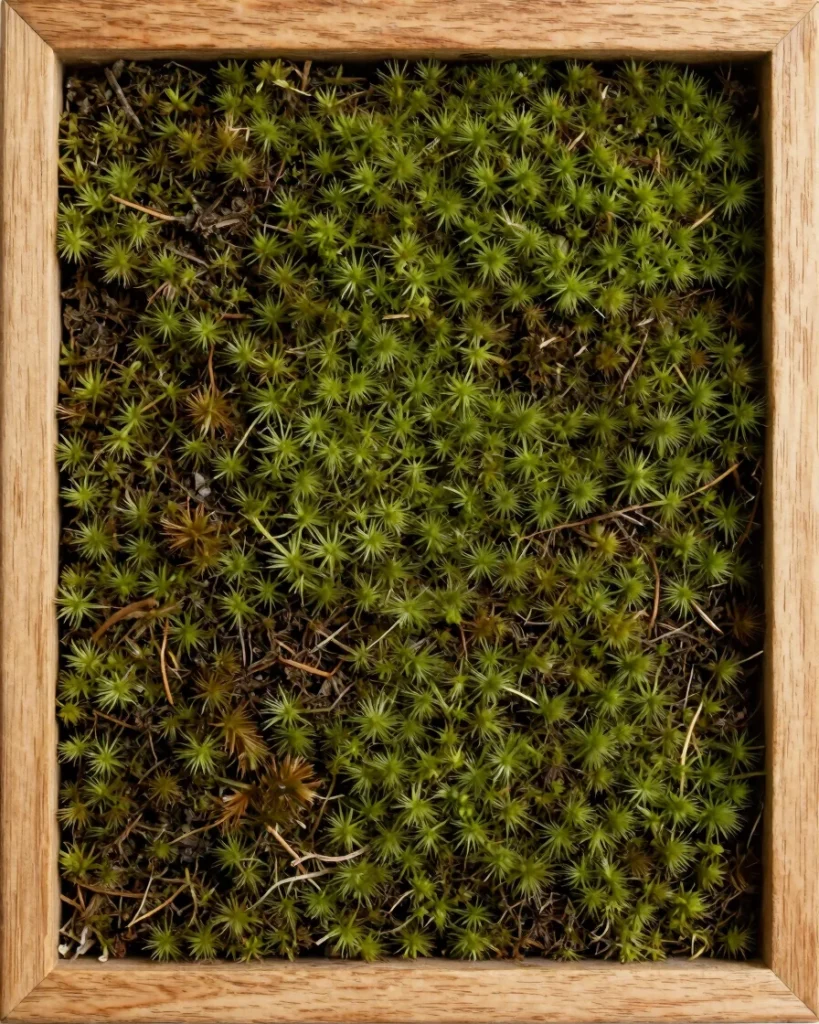
Cushion moss, sometimes called pillow moss or haircap moss, grows in upright clumps that look like tiny green cushions. Each clump is separate, so when you arrange multiple pieces in a frame, you get a textured, almost sculptural surface. The gaps between clumps add depth, and the light catches the rounded tops differently than it would on a flat sheet. Cushion moss is less uniform than sheet moss, which some people find more natural and interesting to look at.
How the surface texture affects the look
The most obvious difference is how the finished piece reads from across a room. A frame filled with flat moss reads as a solid block of colour. It is restful and modern, and it works well in minimalist interiors where you want a clean line. Cushion moss, on the other hand, creates a busy surface with highlights and shadows. It feels more organic, closer to what you would see on a forest floor, and it draws the eye in for a closer look.
For large pieces, flat moss can feel monotonous if the frame is very big. Some people break up the monotony by mixing in a few clumps of cushion moss or by adding preserved reindeer moss, which has a branching, coral-like shape. That combination gives you the broad coverage of sheet moss with the visual interest of varied natural textures for wall art. The contrast between flat and bumpy surfaces makes the piece feel alive.
Practical considerations for framing
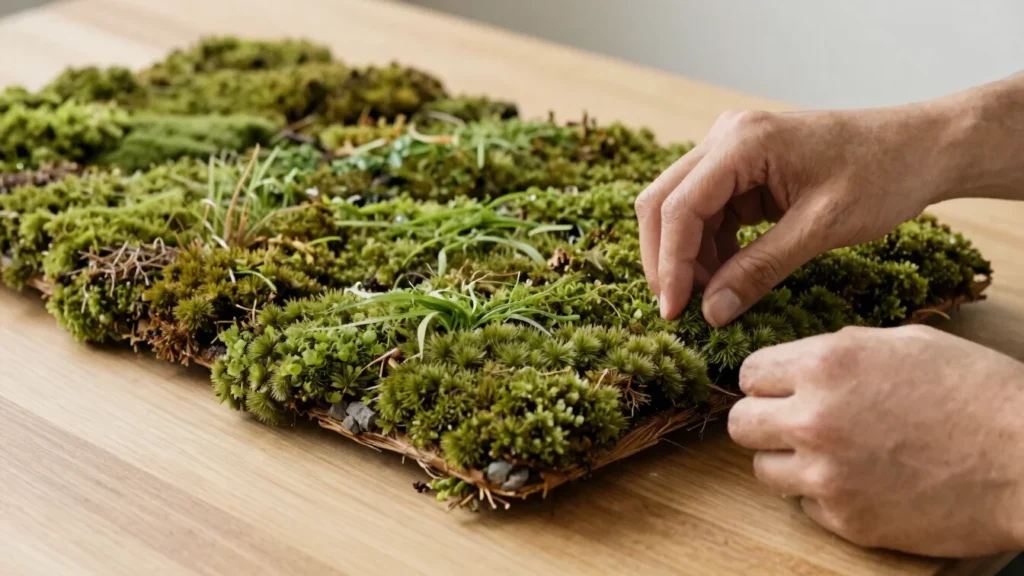
Flat moss is easier to work with when you are covering a large area quickly. It comes in sheets that you can cut with scissors or a craft knife, and it fits neatly into a frame without much fuss. Because it lies flat, it does not push against the glass or the backing board, which means you can use a standard deep frame without worrying about bulging.
Cushion moss requires more careful placement. Each clump has its own shape and height, so you need to arrange them like puzzle pieces to fill the frame without leaving bare spots. The uneven surface also means you need a deeper frame to accommodate the tallest clumps. If the frame is too shallow, the moss will press against the glass or the frame backing, which can compress the clumps and ruin the pillowy effect.
Another practical point is dust. Flat moss gathers dust on its surface, but you can gently wipe it with a soft brush or a microfiber cloth. Cushion moss has crevices where dust settles, and those are harder to clean. For wall art that stays up for years, that difference matters if the piece hangs in a dusty area like a hallway or near an open window.
Colour and light interaction
Flat moss reflects light evenly, which gives it a matte, almost painted appearance. Cushion moss scatters light in multiple directions because of its rounded shapes, so it looks brighter in some spots and darker in others. That variability can make the same preserved moss appear to have a wider colour palette than it actually has, simply because of the way the light hits the clumps.
If you are working with a specific colour scheme in your room, flat moss gives you predictable colour. Cushion moss can shift how the colour reads depending on the angle of light. That is not a problem if you want a dynamic piece, but it is something to check before you commit to a large installation. Hold a sample of each type in the spot where the frame will hang, and look at it at different times of day.
When each type works best
Flat moss is a strong choice for geometric frames, narrow panels, or pieces where you want the moss to act as a background for something else, like a preserved branch or a metal letter. It also works well in office settings where the goal is a calm, professional look without too much visual noise.
Cushion moss suits frames that are meant to be a focal point. A square or round frame packed with cushion moss looks like a living sculpture, and it can stand alone without needing other elements. It also pairs well with natural wood frames, because both the moss and the wood have an earthy, unfinished feel. In a living room or a reading nook, cushion moss adds a tactile quality that invites people to look closely.
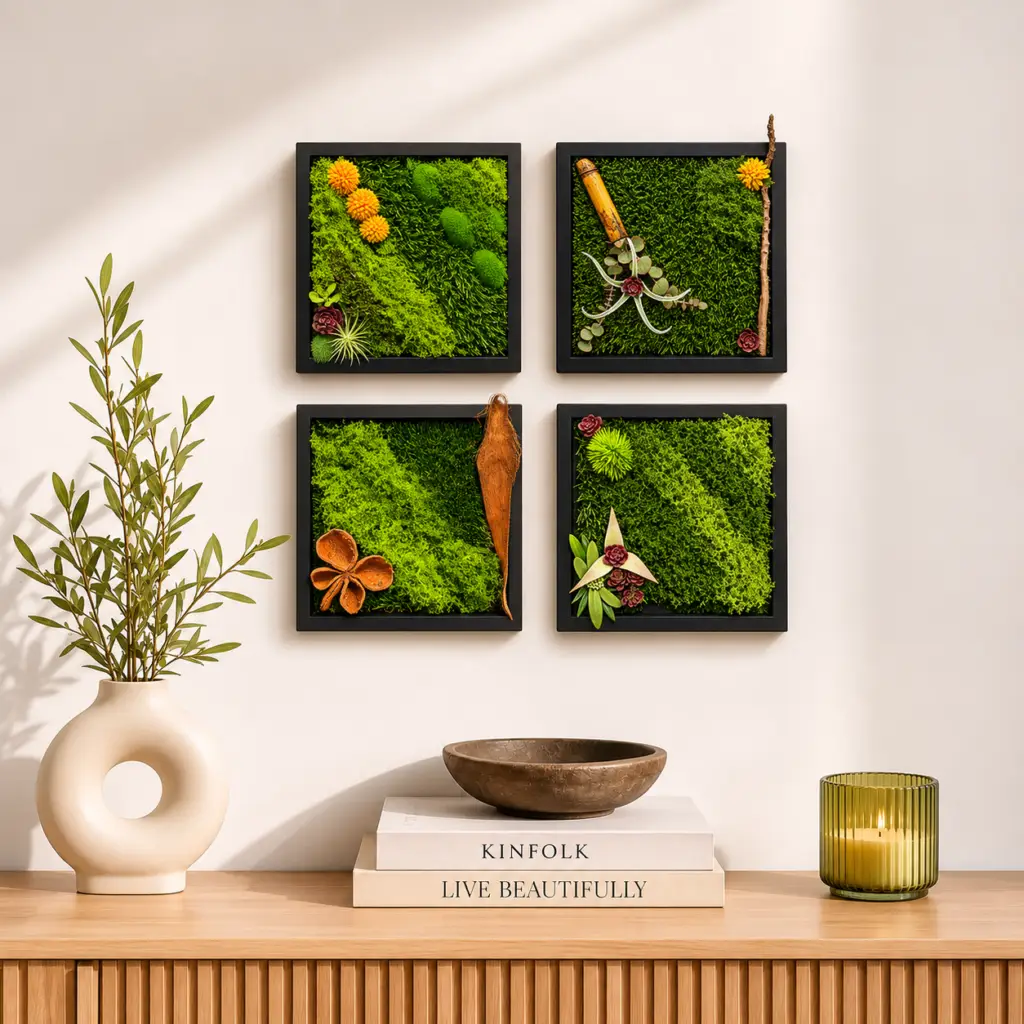
Many people end up using both types in the same frame. A base layer of flat moss covers the background, and then a few cushion moss clumps are glued on top to create peaks and valleys. That approach gives you the coverage of flat moss with the depth of cushion moss. It is a common technique in professional pieces, and it works because the two materials complement each other without competing.
When you combine them, think about the balance. Too much cushion moss can make the frame look chaotic, especially if the clumps are large and varied. Too little, and the flat moss dominates, making the cushion clumps look like mistakes rather than intentional accents. A good rule is to cover about two-thirds of the frame with flat moss and use cushion moss for the remaining third, placing the clumps in clusters rather than spreading them evenly.
The phrase natural textures for wall art comes into play here because mixing flat and cushion moss lets you create a surface that changes as you move around the room. That kind of depth is hard to achieve with a single material, and it is one reason why preserved moss pieces have become popular for interior display. The natural variation in the moss, combined with the frame and the wall colour, becomes part of the art itself.
Preservation and longevity
Both flat and cushion moss go through a preservation process that replaces the natural moisture with a glycerin-based solution. That keeps the moss soft and green without needing water or sunlight. The preservation does not change the basic structure of the moss, so flat moss stays flat and cushion moss keeps its rounded shape.
Over time, preserved moss can fade if it is exposed to direct sunlight for many hours each day. That affects both types equally, though the colour shift may be more noticeable on flat moss because it is more uniform. Cushion moss, with its shadows and highlights, can hide slight fading better. If the frame hangs in a room with strong afternoon sun, consider a UV-protective glass or place the piece on a wall that gets indirect light.
Humidity also matters. Preserved moss does not like high moisture, because it can cause the glycerin to weep or the moss to develop mould. Bathrooms and kitchens are risky unless the space has good ventilation. For those rooms, flat moss is slightly safer because it has fewer crevices where moisture can collect, but neither type is truly suited for steamy environments.
Choosing based on the frame style
The frame itself should match the moss type you choose. A slim, modern frame with clean lines looks best with flat moss, because the simplicity of the frame complements the simplicity of the surface. A chunky wood frame or a rustic shadow box works well with cushion moss, because the frame has enough visual weight to balance the textured moss.
If you are making a small piece, say a 20x20 cm frame, cushion moss can look overwhelming because the clumps take up a large proportion of the space. Flat moss is usually better for small frames, because it makes the piece feel cohesive. For large frames, over 60 cm on any side, cushion moss starts to look natural and spacious, while flat moss can look like a painted wall. At that scale, mixing the two types becomes almost necessary to keep the piece interesting.
Ultimately, the choice comes down to the effect you want. Flat moss gives you a calm, uniform surface that recedes into the room. Cushion moss gives you a textured, lively surface that demands attention. Neither is better than the other, but they suit different frames, different rooms, and different tastes. Understanding how each one behaves in a frame helps you make a decision that you will be happy with long after the moss is mounted.